Does Putting Grass Clippings on Bare Spots Help Grass Grow in Casselberry?
Clippings are good for a healthy lawn, but a bare patch needs a different fix, and the right one starts with knowing why the grass died.
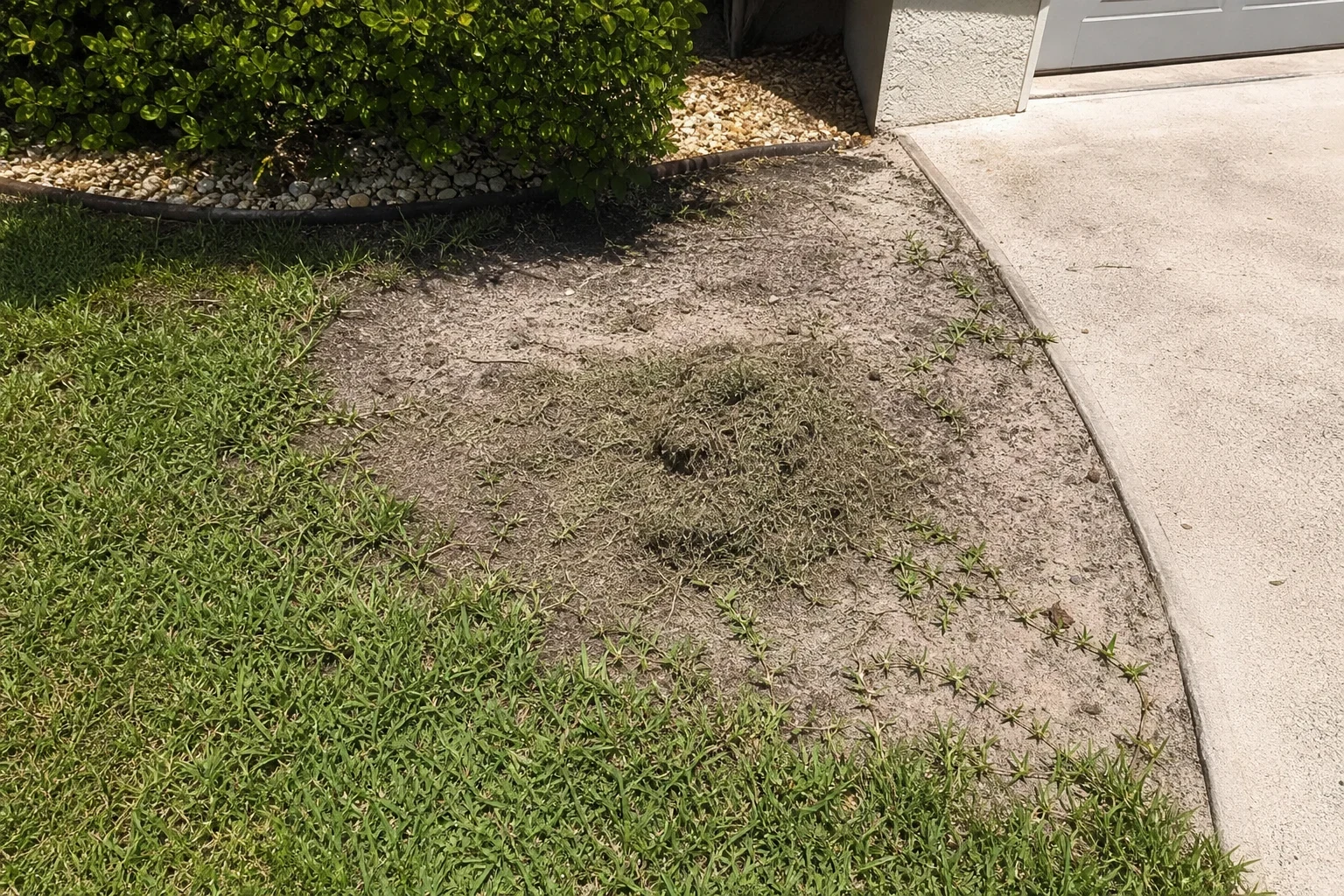
Does putting grass clippings on bare spots help grass grow?
No, piling grass clippings on a bare spot will not grow new grass. Clippings carry almost no viable seed, and the grass most local lawns use spreads by runners, not seed. A thick layer can smother nearby turf. Fix the cause first, then repair the spot with plugs, sod or runners. Questions? (407) 972-1255
Why clippings don't regrow a bare patch
Most lawns around Casselberry are St. Augustine, with some Bahia and Zoysia mixed in. St. Augustine almost never grows from seed. It spreads by stolons, the thick runners that creep along the soil surface and root as they go. Mowing cuts leaf blades, not runners, so the clippings you rake onto a bare spot have nothing in them that can take root.
Even with Bahia, which does make seed heads, the seed in fresh clippings is usually immature or too sparse to matter. You would get a few stray sprouts at best, scattered unevenly over the patch.
There is also a downside. A heavy pile of wet clippings packs into a mat in our humid weather. That mat holds moisture against the soil, shades out the runners trying to creep in from the edges and can encourage fungus. So the pile can actually slow down the grass that would have covered the spot on its own.
Where clippings do help your lawn
Leaving clippings on a healthy lawn after mowing is a good habit. Short clippings break down within days and return nitrogen and moisture to the soil, which means you can lean a little less on fertilizer. The key is that they fall in a thin, even layer across turf that is already growing.
If you want to use clippings, mow often enough that you remove about a third of the blade at a time, and let them drop where they land. Bag them or spread them out if they come off in clumps after a long gap between mowings or a wet afternoon.
- Do: let short clippings fall back on healthy grass.
- Do: spread out any clumps so they dry and break down.
- Don't: pile clippings on bare soil or thin patches.
- Don't: leave clippings from diseased areas on the rest of the lawn.
What's causing the bare spot in the first place
Before you patch anything, find out why the grass died. If you lay new grass over the same problem, you'll have the same bare spot again in a few months. In our area the usual suspects are fairly predictable, and most of them leave clues you can see.
Look at the edges of the patch. Yellow, straw-colored grass in a sunny spot near the driveway or sidewalk in the dry months often points to chinch bugs. Circular brown rings with orange or reddish edges on the blades in cooler, wet weather suggest large patch fungus. A spot that stays thin no matter what, under an oak or along the north side of your home, is usually just too shady.
- Chinch bugs, especially in hot, dry, sunny areas
- Large patch or other fungus during cool, damp stretches
- Too much shade from trees or structures
- Sprinkler heads that are blocked, tilted or missing a zone
- Compacted soil from foot traffic, parked cars or a dog's favorite path
- Dog urine, which leaves dead centers with green rings
What actually repairs a bare spot
Once the cause is handled, you have a few options. Which one makes sense depends on the size of the patch, the type of grass and how quickly you want it green again.
Small spots in healthy St. Augustine can close up on their own during the warm months if you keep the edges watered and fed and keep foot traffic off. Medium patches do well with plugs set into the soil a few inches apart. For larger areas, or when you want an even look right away, sod is the fastest fix. Bahia lawns can be reseeded, ideally in late spring or early summer when warm soil and rain help the seed sprout.
Timing matters here. Warm-season grass roots best from spring through early fall. Patching in the coolest part of winter usually means slow rooting and more risk of the new grass struggling. New sod also needs frequent watering for the first few weeks, so check your current watering-day rules and any allowances they give for newly installed grass.
- Let runners spread: small spots, healthy surrounding turf, warm season
- Plugs: medium patches where you can wait several weeks
- Sod: large areas or when you want the lawn even right away
- Seed: Bahia lawns only, best in late spring or early summer
How we handle bare spots for homeowners
When we come out to look at a thin or bare lawn, we start with the cause. We check the edges for insects and fungus, run the sprinkler zones to see what is and isn't getting water, and look at shade and soil compaction. Then we tell you plainly what we found and what we'd recommend, whether that's a treatment and some patience or new sod.
If the answer is lawn care and a few weeks of good watering, we'll say so. If the spot sits in deep shade where grass won't hold, we may suggest a mulched bed or a shade-tolerant planting instead of sodding it again and again.
More questions about bare spots
Something not covered here? (407) 972-1255
Should I rake out dead grass before patching?
Yes. Rake out the dead thatch and loosen the top inch or two of soil so new runners, plugs or sod can make good contact and root.
Can I put topsoil on a bare spot?
A thin layer of topsoil can level a low spot before you lay sod or plugs. A thick layer on its own will not grow grass and can bury the edges of healthy turf.
How long does a bare spot take to recover?
With plugs in the warm months, many St. Augustine patches close up in several weeks to a couple of months. Sod looks finished the day it goes down and roots in over the next few weeks with steady watering.
Will fertilizer fix a bare spot?
Fertilizer can help healthy edges spread faster, but it won't regrow grass where there are no runners. Too much nitrogen can also feed fungus and chinch bugs.
Get a straight answer on your bare spots
One call sets up a free estimate. We'll walk your lawn with you, find out what's killing the grass and explain your options, from a simple treatment to new sod, before you spend anything.