ServicesSod Installation
Sod Installation in Casselberry
If your lawn is more weeds, bare sand and brown patches than grass, new sod gets you a full lawn in a few weeks instead of a few seasons. We prep the ground properly, pick a grass that suits your yard and tell you exactly how to water it.
When New Sod Is the Right Call
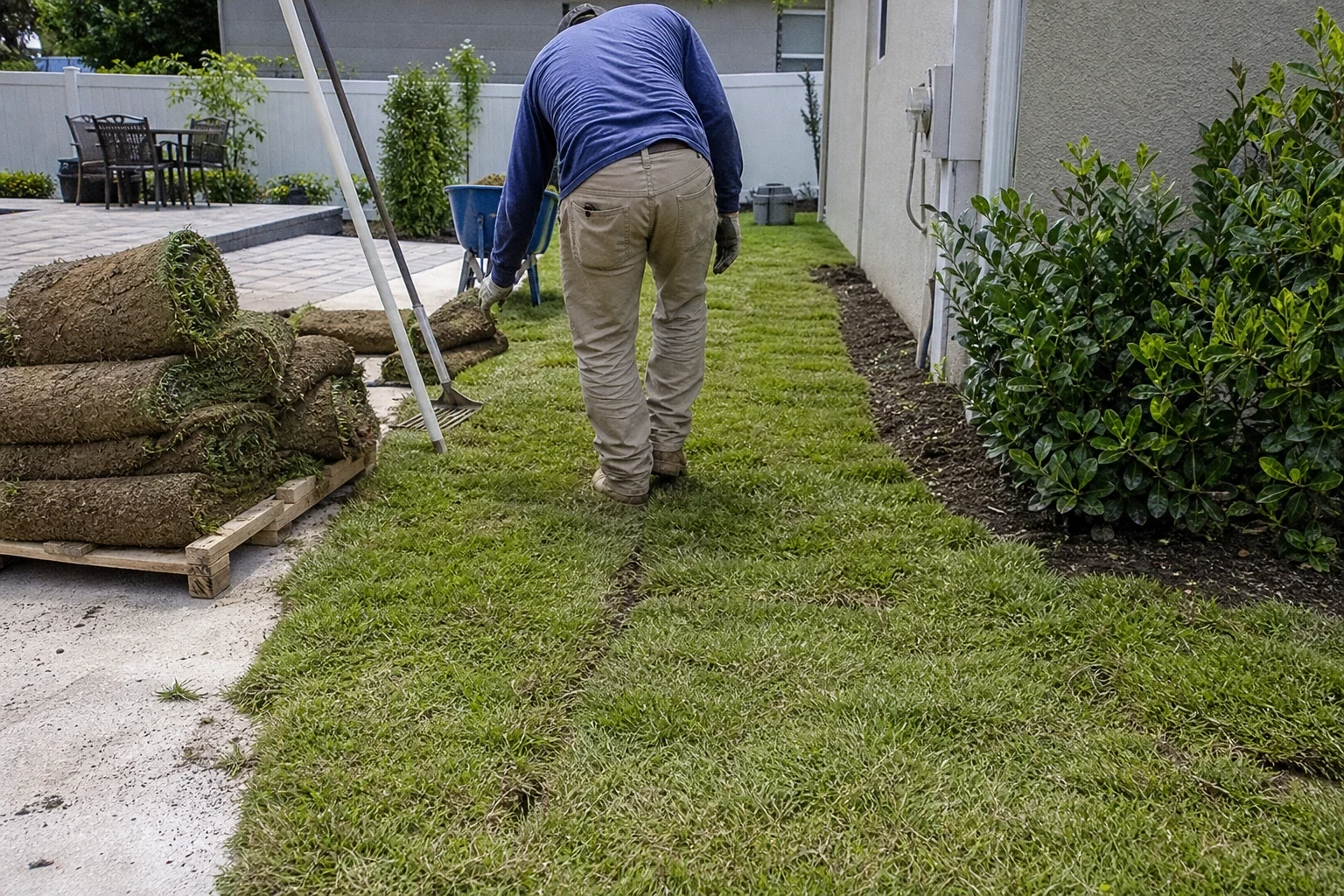
Sod makes sense when the grass you have is too far gone to bring back with feeding and weed control. If more than about half the lawn is weeds or bare ground, or the same areas die back every summer, starting over is usually cheaper than years of patching. If your lawn just needs regular attention, we will say so and point you to our lawn care service instead.
Most lawns around here are St. Augustine, with Bahia and Zoysia close behind. Each behaves differently. St. Augustine handles some shade but wants regular water. Bahia tolerates dry, sandy soil but looks thinner and sends up seed heads. Zoysia is dense and soft but slower to recover from damage. We walk your yard, look at sun, shade and how you use the space, and give you a straight recommendation.
We are a family-owned business, licensed and fully insured, so the crew working on your property is covered from the first cut to the final roll.
What Our Sod Installation Includes
- Removing the old turf
- We cut out the existing grass and weeds with a sod cutter rather than laying new sod on top. Sod placed over dead grass roots poorly and often fails in patches by the next summer.
- Grading and soil prep
- We rake and level the ground so water drains away from your home and does not pool in low spots. Where the sand is very poor, we may suggest working in a thin layer of soil to help roots take hold.
- Grass matched to your yard
- You get a grass type chosen for your actual conditions, including a shade-tolerant variety under trees if that is where the lawn keeps thinning out.
- Tight, staggered laying
- Pieces go down with seams pressed together and staggered like brickwork, then cut cleanly around beds, walks and edges. Gaps dry out first, so we keep them closed.
- Rolling and first watering
- We roll the finished lawn so the roots make contact with the soil, then give it a thorough first soak before we leave.
- Cleanup and watering plan
- Old turf and scraps are hauled away. You get a simple written watering schedule for the first weeks, since that is where most new lawns succeed or fail.
Signs Your Lawn Needs Replacing, Not Repairing
Weeds outnumber the grass
When dollarweed, crabgrass and sedge have taken over most of the yard, spraying alone rarely brings back a full lawn.
Large dead patches that keep spreading
Chinch bug damage or fungus in St. Augustine can leave wide brown areas that never fill back in. Once the runners are gone, there is nothing left to recover.
Bare sand under shade
Grass that thinned out as trees grew may need a more shade-tolerant variety, or a bed instead of turf in the darkest spots.
Uneven, lumpy ground
Ruts, low spots and puddles after rain make mowing hard and drown roots. Regrading before new sod fixes the cause, not just the look.
After construction or a removal project
Torn-up ground after a tree removal, stump grinding or new patio is a natural time to lay fresh sod over the disturbed area.
How a Sod Job Runs
- 1
Walkthrough and estimate
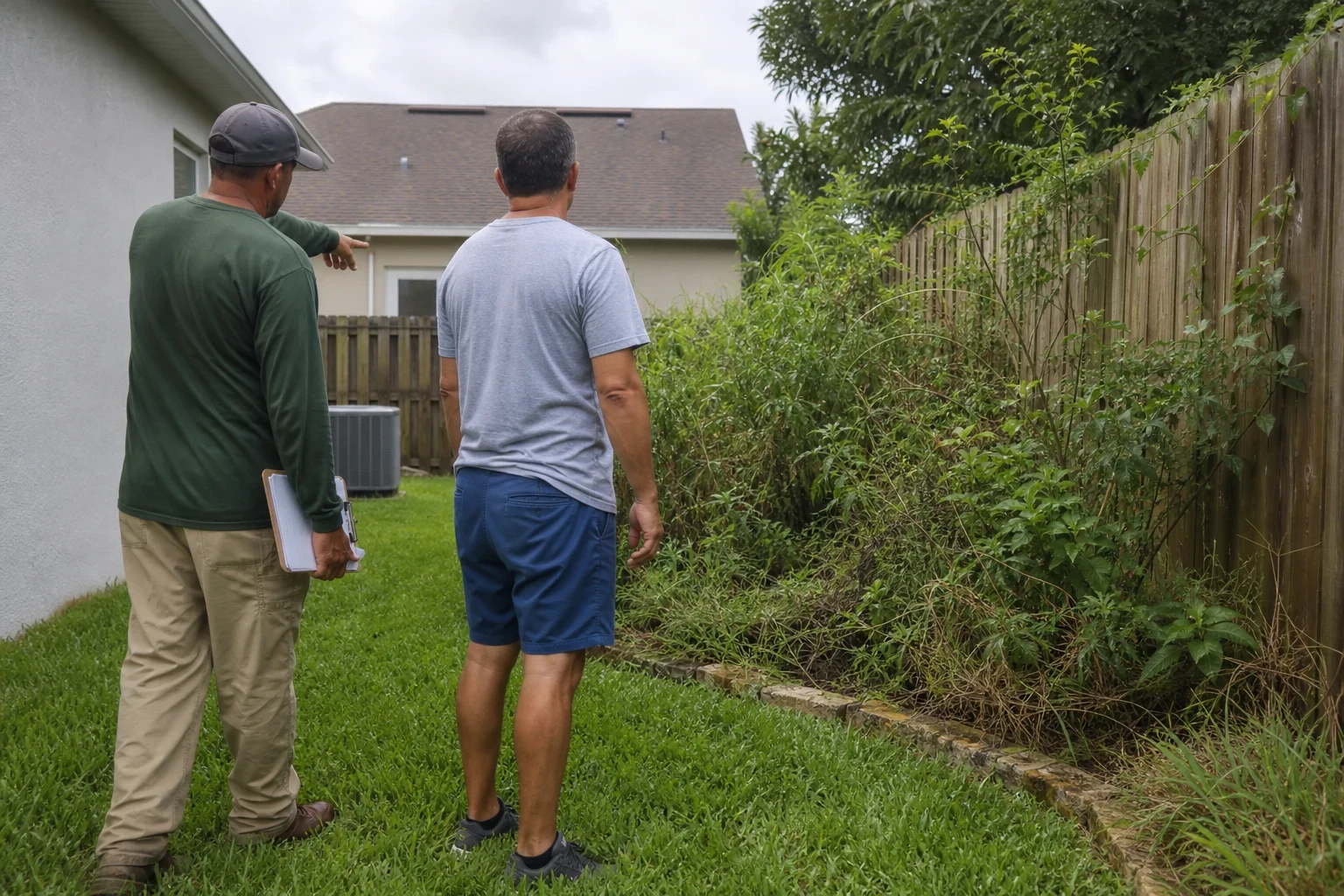
We visit, measure the area, check sun and drainage and look at your sprinkler coverage. You get a free estimate that spells out prep, grass type and haul-away.
- 2
Sprinkler check
Before laying anything, we confirm your irrigation reaches every corner. Dry spots kill new sod fast, so we flag any heads that need adjusting or adding.
- 3
Prep day
We strip the old lawn, remove debris and grade the soil. On most yards prep and laying happen back to back so the ground does not sit bare.
- 4
Laying and rolling
Fresh pallets arrive and go down the same day they are cut. We lay, trim, roll and water, then walk the lawn with you before we leave.
- 5
The first few weeks
You water on the schedule we give you and keep foot traffic light. Call us if anything looks off, and we will come take a look.
What Moves the Cost of New Sod
The price comes down to how much ground there is and how much work it takes to get that ground ready. Your free estimate lists each part separately, so you can see where the money goes. If paying over time works better for your budget, we can finance projects up to $100,000, with terms anywhere from 2 to 12 years and no penalty for paying the balance off early.
- Square footage
- Sod is bought and laid by area, so the size of the lawn is the biggest single factor.
- Grass variety
- Bahia generally costs less than St. Augustine, and Zoysia usually costs more. Shade varieties can also carry a higher price.
- Removal and grading
- Thick weeds, roots, old debris or major low spots add labor. A flat yard with thin old turf preps faster.
- Access
- Narrow side gates, fences or slopes mean more hand-carrying of pallets, which adds time.
- Irrigation fixes
- If sprinkler heads need moving or adding for full coverage, that work is quoted separately through our irrigation service.
Sod Installation Questions
Something not covered here? (407) 972-1255
What is the best time of year to lay sod?
Sod can go down most of the year in Central Florida. Late spring through summer is ideal because warm soil and regular rain help roots grow quickly. Cooler months work too, but rooting is slower and watering still matters.
How long before I can walk on or mow my new lawn?
Keep traffic light for the first two to three weeks while roots take hold. A gentle tug on a corner tells you: if it resists, the roots are in. The first mow usually happens around that point, with the mower set high.
How much should I water new sod?
Often at first, then less over the following weeks as roots go deeper. We give you a written schedule and explain how local watering rules apply to new sod, so you are not guessing.
Can you lay sod over my existing grass?
We do not recommend it. New sod over old turf sits on a layer that blocks roots from reaching soil, and it tends to dry out and die in patches. Removing the old lawn first is the step that makes the new one last.
Why does grass keep dying under my oak tree?
Usually too little sun and too much root competition. We may suggest a shade-tolerant grass, a bit of canopy thinning through our tree trimming service, or a mulched bed where grass simply will not grow.
Ready for a Lawn That Fills In
We will walk your yard, tell you which grass fits and what prep it needs, and give you a clear price. No pressure, just straight answers.