ServicesLawn Care
Lawn Care in Casselberry
We mow, edge, feed and keep an eye on your lawn so it stays thick and green through long summers and dry springs. If something is going wrong, we tell you the cause, what it takes to fix it and what it will cost.
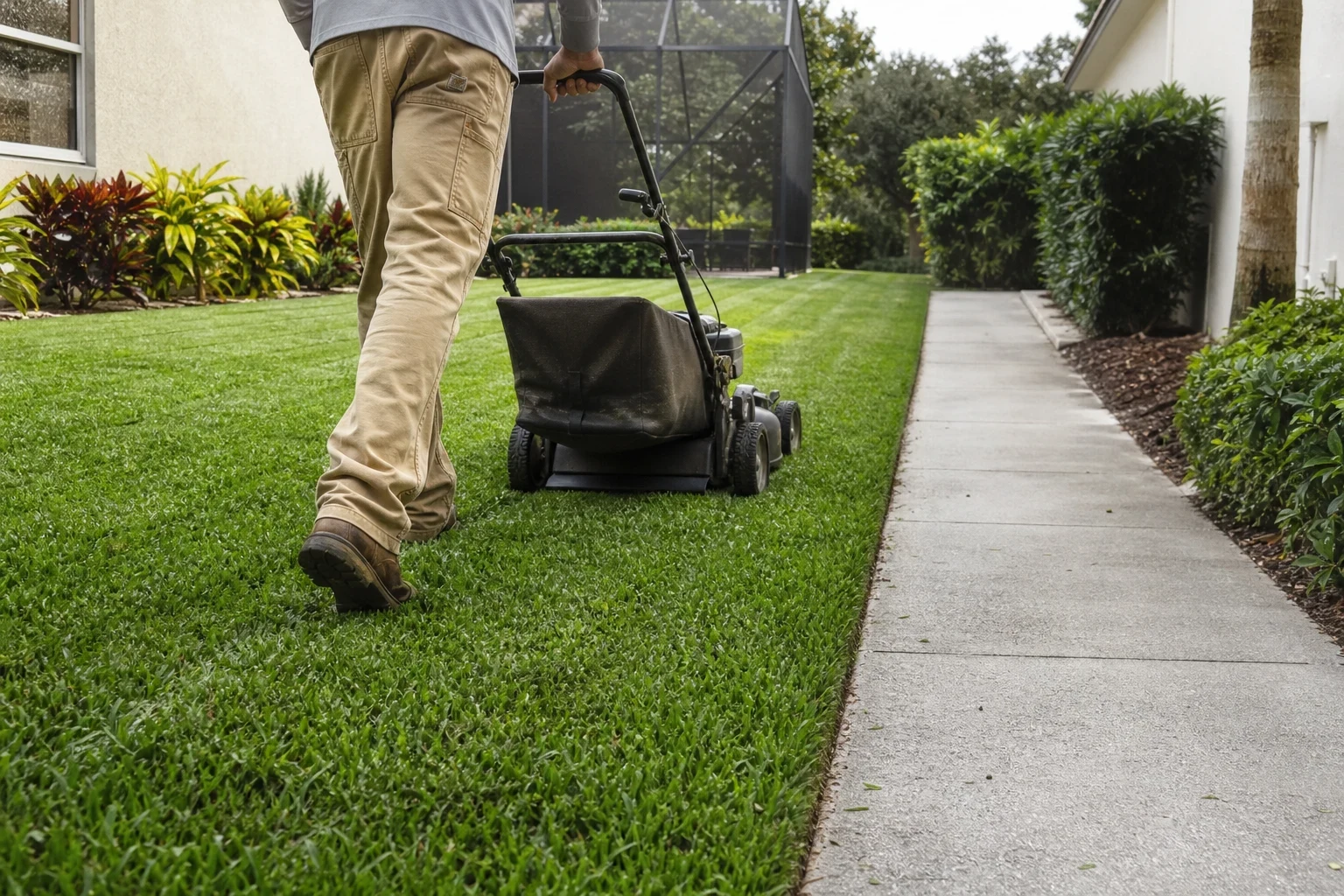
What our lawn care covers
Most lawns around here are St. Augustine, with some Bahia and Zoysia mixed in. Each grass wants a different mowing height, a different feeding schedule and a different amount of water. A lot of lawn trouble starts when one routine gets applied to all of them.
We set up a plan for your grass type and your yard: how often we mow, what height we cut at and when feeding makes sense. Then we stick to it and tell you plainly when something changes, like a chinch bug patch in July or fungus showing up in the cooler months.
Landscaping Casselberry is family-owned, and the same small crew tends to see your lawn visit after visit. That helps, because we notice when a corner starts thinning before it turns into a bare spot.
What's included in a visit
- Mowing at the right height
- We leave St. Augustine long, somewhere near three and a half to four inches after each pass. Go much shorter and the grass weakens while weeds find room to move in. Bahia and Zoysia get their own deck settings, and we keep blades sharp so each blade of grass gets a clean cut instead of a ragged tip.
- Edging and trimming
- We edge along driveways, sidewalks and bed lines, and string-trim around fences, trees and the AC pad. Clippings get blown off hard surfaces before we leave.
- Seasonal feeding
- Fertilizer goes down as the grass greens up in spring and again once fall temperatures ease, the two stretches when roots actually take it in. Through the summer rainy months, local rules cap nitrogen and phosphorus, so we stay inside those limits.
- Weed control
- Dollarweed, crabgrass and sedge are the usual suspects. We treat the weeds you have instead of spraying the whole yard on a calendar.
- Pest and disease checks
- Each visit we look for the yellow-then-brown patches of chinch bugs and the rings of brown patch fungus. If we find either, we show you and explain the treatment before doing anything.
Signs your lawn needs attention
Spreading brown or straw-colored patches
In hot, dry weather, patches along the driveway or sidewalk often point to chinch bugs. They can take out a big section of St. Augustine in a few weeks if nobody catches them.
Weeds taking over thin areas
Dollarweed loves wet, thin turf. When it spreads, it usually means the lawn is getting too much water or being mowed too short.
Brown rings in cooler months
Circular brown areas that show up in fall or winter are often large patch fungus. Cutting back on watering and treating early keeps it from spreading.
Grass that looks scalped or stemmy
If your lawn looks pale and stubby after a mow, it is being cut too low. It usually recovers once the height is corrected.
No time to keep up with it
In the summer, grass here can need cutting every week. If the yard is getting away from you, a regular schedule takes it off your plate.
How it works
- 1
Free walkthrough
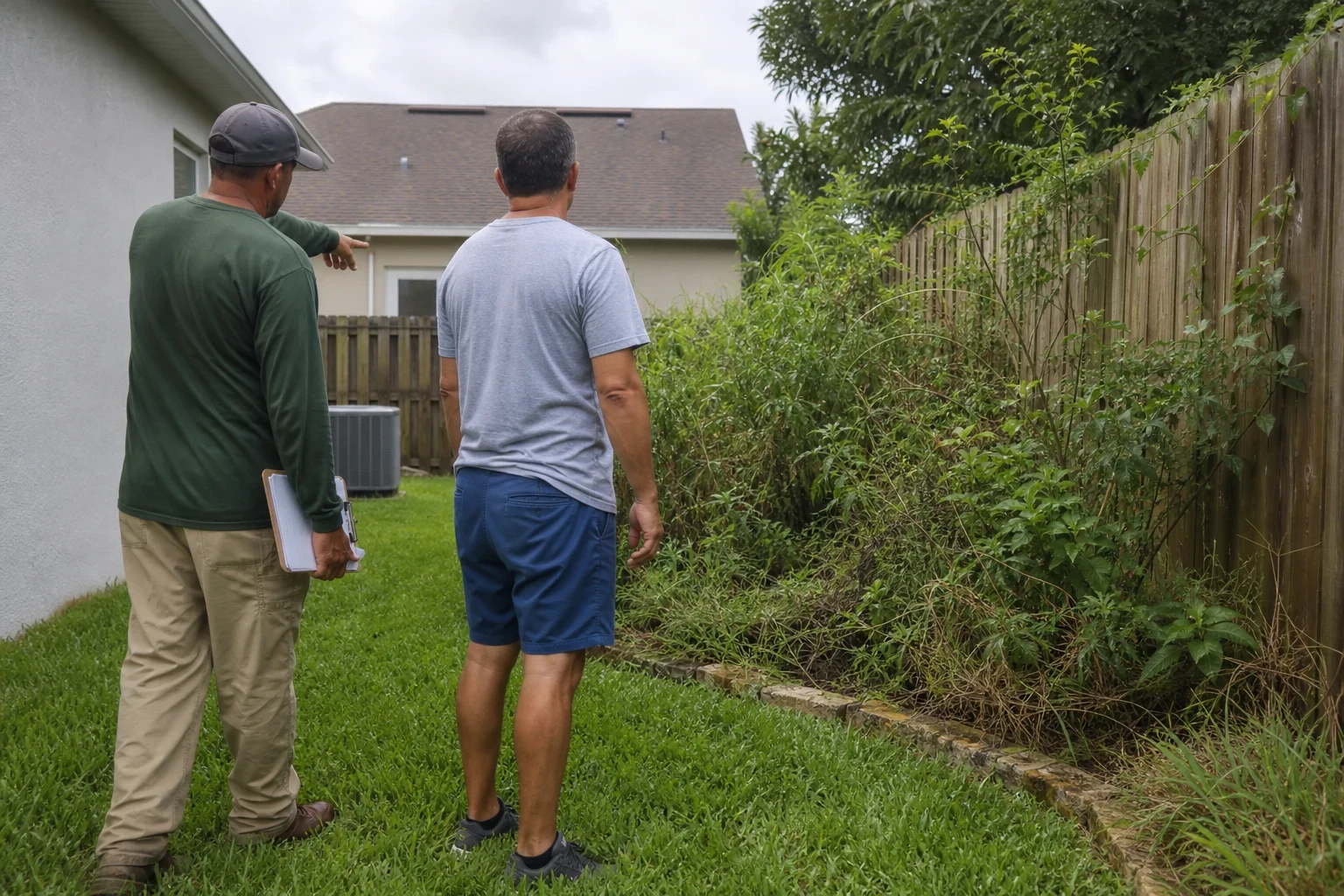
We come out, walk the lawn with you and look at grass type, soil, shade, problem spots and how your sprinklers are set. You get a straight read on what is going on.
- 2
A clear plan and price
We tell you how often we would mow, whether feeding or weed treatment makes sense and what each visit costs. Nothing gets added without asking you first.
- 3
Regular visits
We show up on your schedule, mow, edge, trim and clean the hard surfaces. Gates get closed behind us and pets stay safe.
- 4
Updates when something changes
If we spot pests, fungus or a dry zone, we let you know what we saw and what we recommend. If a sprinkler head is broken, we will point it out and our irrigation work can fix it.
What affects the cost of lawn care
Lawn care is priced by the visit or the season, and the main things that move the number are size and how much work the lawn needs. We walk the property before quoting so the price reflects your actual yard. If treatment is needed later, we price it separately and tell you before we start.
- Lawn size and layout
- A big open lawn mows faster per square foot than a yard broken up by beds, trees and tight corners that need more trimming.
- How often we visit
- Weekly mowing in the growing season costs more over the year than every other week in winter, but it keeps the grass healthier and the weeds down.
- Feeding and treatments
- Mowing alone is the base. Fertilizer, weed control and pest or fungus treatment add to it, depending on what the lawn needs.
- Starting condition
- An overgrown or weedy lawn takes extra work on the first visits. If a section is too far gone, we may suggest sod installation instead of trying to nurse it back.
Lawn care questions
Something not covered here? (407) 972-1255
How often should my lawn be mowed?
From spring through fall, most lawns here need mowing every week because the grass grows fast in the heat and rain. In the cooler, drier months, every other week is usually enough. We adjust as the season changes.
Why is my St. Augustine turning brown even though I water it?
Watering more is not always the fix. Brown patches in hot weather are often chinch bugs, and brown rings in cooler weather are often fungus, which extra water makes worse. We check the edges of the patch to find the real cause before recommending anything.
Do you fertilize in the summer?
Local fertilizer rules restrict nitrogen and phosphorus during the summer rainy season, so we follow those limits. We do the main feeding in spring and fall and use only what is allowed in between.
What happens if something gets damaged while you mow?
We walk the lawn before we start and pick up stray rocks, sticks and toys, and we take note of low sprinkler heads. If something still gets hit, we tell you right away and show you what happened. Our company is business licensed and fully insured, so accidents like that are covered properly.
Do I have to sign a long contract?
We set up a regular schedule because lawns do better with steady care, and we explain the terms clearly during your estimate. If you have questions about how often we come or what is included, just ask on the call.
Let's take a look at your lawn
We will walk your yard, tell you what is helping and what is hurting your grass, and give you a clear price for regular care. The estimate is free.