ServicesLandscape Design
Landscape Design in Casselberry
We design front and back yards around how you actually use them, with plants that handle Florida sun and summer downpours. You get a clear drawing, a plant list and a straight answer on what each part costs before anything goes in the ground.
What landscape design gets you
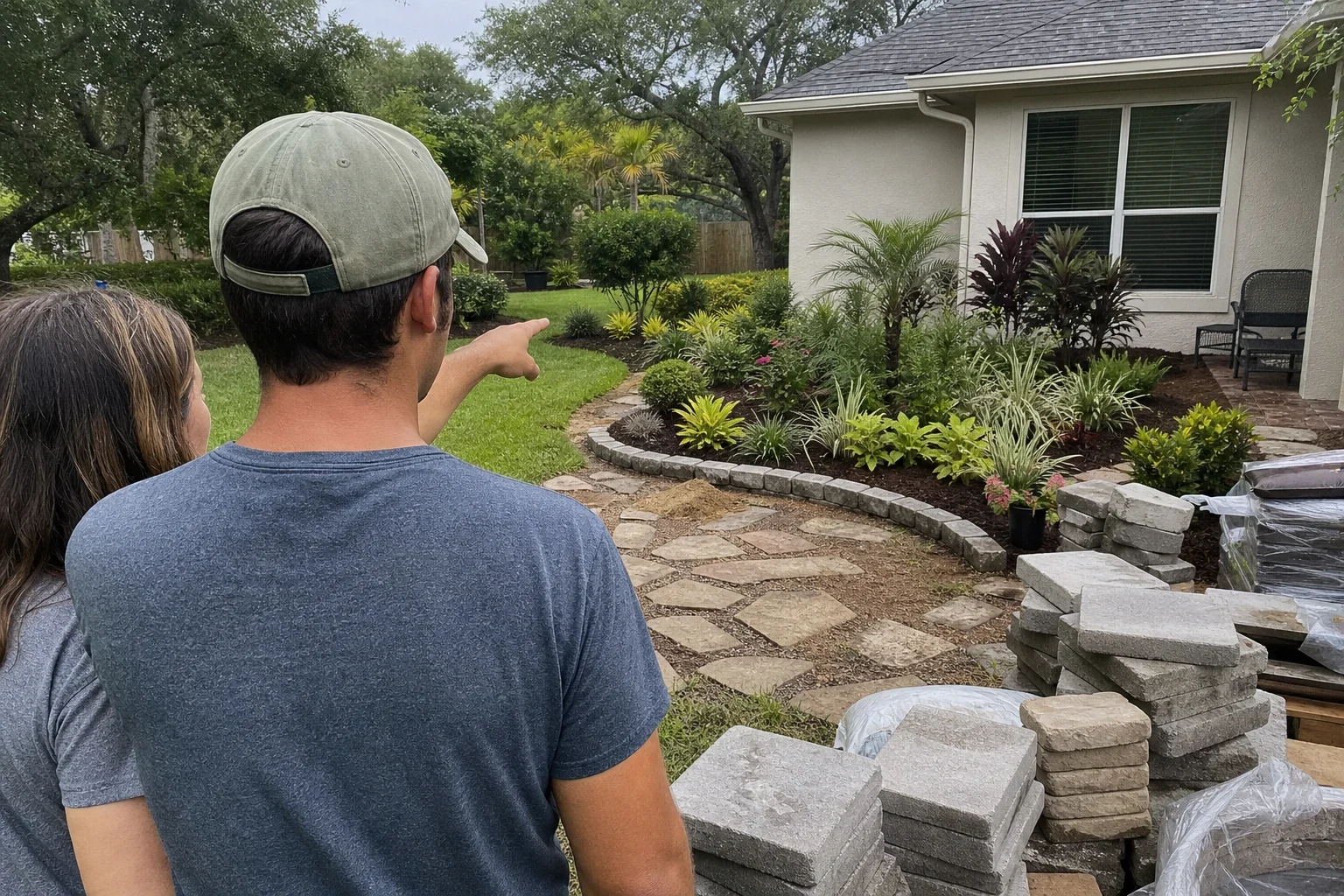
Landscape design is the planning step before anything is planted or built. We look at where the sun hits through the day, where water sits after a storm, what you want to keep and what you're tired of maintaining. Then we put it on paper so you can see the result before you spend on it.
It's the right call when you're redoing more than one bed, adding a patio or walkway, or replacing a yard that's been patched together over the years. If you only need fresh mulch or a few shrubs swapped out, our mulch and beds service is the simpler and cheaper route, and we'll tell you that plainly.
We're a family-owned company, business licensed and fully insured, and the plan we draw with you is the plan our own crew installs at your home.
What's in a design from us
- Walkthrough and measurements
- We walk the property with you, measure beds and open areas, and note sun and shade at different times of day. We also check the grade and look for spots where rain pools or runs toward the foundation.
- Scaled layout drawing
- You get a plan showing beds, lawn areas, paths and any hardscape, drawn to scale. That way plant counts, soil and paver quantities match what's really there.
- Plant list matched to each spot
- Every plant is picked for its light, its mature size and how much water it needs once established. We lean toward plants that do well in sandy soil and long, hot summers, so you aren't replacing them every other year.
- Irrigation and drainage notes
- A new layout usually means moving or adding sprinkler zones. We mark where heads and drip lines belong so beds and turf are watered separately, and our irrigation crew can build it from the same plan.
- Line-item estimate
- Plants, soil, edging, mulch, sod, pavers and labor are each listed on their own line. You can see where the money goes and decide what to do now and what to save for later.
Signs your yard needs a plan, not another patch
Plants keep dying in the same spot
That's usually a light or water mismatch, not bad luck. A shade plant in afternoon sun, or a drought-loving shrub next to a sprinkler head, won't last no matter how many times it's replaced.
Shrubs are swallowing windows and walkways
Plants that looked right ten years ago may simply be the wrong size for the space. A redesign picks plants that stay in proportion without constant cutting back.
Water stands after every storm
Puddles near the house or soggy patches in the lawn point to grading or drainage problems. A good design fixes those before a single plant goes in.
You never use the backyard
No shade, nowhere to sit, no clear path. A layout with a small patio, a planted screen for privacy or a shade tree can turn it into space you actually spend time in.
Upkeep eats your weekends
Lots of edging, many small scattered beds and pots that need hand-watering add up. A simpler layout can cut the work without making the yard look bare.
What moves the price of a landscape design
There's no single price, because no two yards start in the same place. The estimate comes down to how much area changes, what goes in and what has to come out first. We list each piece so you can adjust it. If paying over time works better for you, we offer financing up to $100,000, with terms anywhere from 2 to 12 years and no penalty for paying it off early.
Size of the area
Refreshing the entry beds by your front door is a very different job from reworking the whole lot. More square footage means more plants, soil, mulch and labor.
Plant size and type
A 3-gallon shrub costs far less than a 15-gallon one, and palms or large trees add equipment and labor. If you're willing to wait a season or two, smaller plants grow into the space and save you money up front.
Removal and prep work
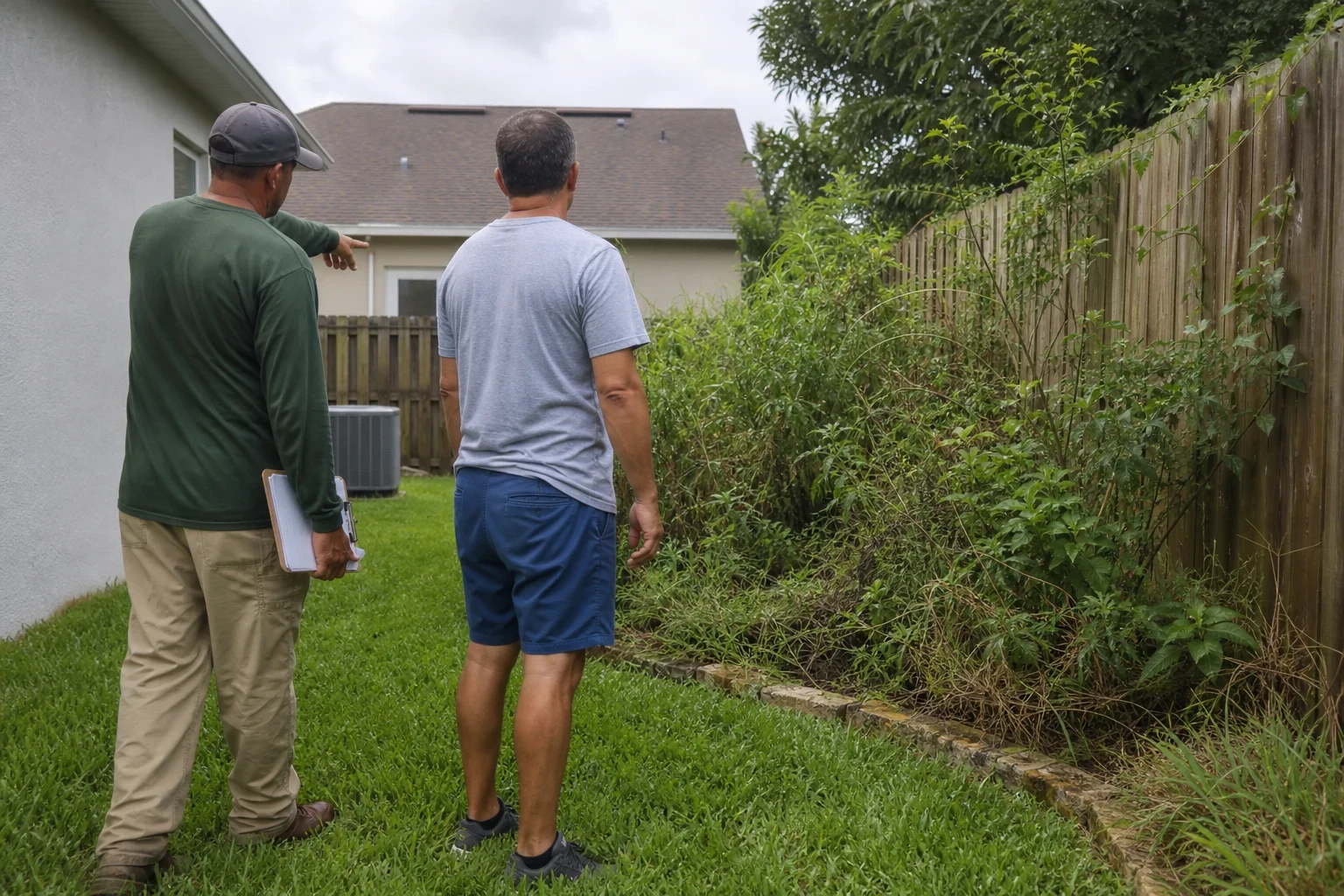
Old shrubs, stumps, overgrown roots and worn-out soil all add hours before planting starts. Stump grinding or bamboo removal is sometimes part of the job.
Hardscape
Patios, walkways and paver or stone borders are usually the largest line on the estimate. Material choice and how much digging and base prep the ground needs drive that number.
Irrigation changes
Rezoning sprinklers or adding drip lines to new beds adds parts and labor, but it's what keeps new plants alive through the dry spring.
How a design project runs
- 1
Call and on-site walkthrough
Call us and we'll set a time to walk your yard with you, free of charge. Bring your wish list and a rough budget range; the budget shapes the plan more than anything else.
- 2
Draft plan and estimate
We come back with a layout, plant list and line-item estimate. We go over each choice with you and explain why it's there.
- 3
Revisions
Change what doesn't feel right. Swap a plant, shrink the patio, move a bed. We adjust the drawing and the numbers together so the final estimate matches the final plan.
- 4
Installation day
Our crew marks beds with paint, protects your driveway and walkways, and removes old plants and sod. Then we grade, make the irrigation changes, plant and mulch, and haul off debris before we leave.
- 5
Final walk and watering guide
We walk the finished yard with you and go over how to water new plants for the first few weeks while their roots settle in.
Landscape design questions
Can the plan be installed in stages?
Yes, and plenty of our customers go that way. A common order is grading and irrigation first, then plantings, then a patio when the budget allows. We split the estimate into phases so each later stage builds on the work already in the ground instead of tearing it up.
How long until the yard looks finished?
It looks clean and complete the day we finish installing. Shrubs and groundcovers usually spread out and close the gaps between them over one to two growing seasons. Our long warm season helps, as long as new plants get steady water early on.
Will the plants survive summer heat and the occasional freeze?
We choose plants suited to Central Florida's heat, humidity and rainy season. A few cold nights do happen some winters, so we point out which plants on your list may need covering when a freeze is forecast.
Can you work around what I already have?
Yes. Healthy trees, established palms and shrubs in good shape are worth keeping, and they save you money. We'll tell you honestly which existing plants are worth working around and which are past saving.
My neighborhood has an HOA. Can you help with that?
We'll give you the drawing and plant list, which is usually what an HOA asks to see. Submitting it and getting approval is between you and your association, and we'll adjust the plan if they request changes.
Let's walk your yard together
Tell us what bothers you about the yard now and what you'd like instead. We'll come out, look at it with you and give you straight answers on your options and what they cost.